

Philippines services
Choosing the right payroll solution for your business in the Philippines can be daunting. Should you engage a payroll service provider? Should you opt for a payroll system only? Or perhaps both? With the numerous options available, the process can be…
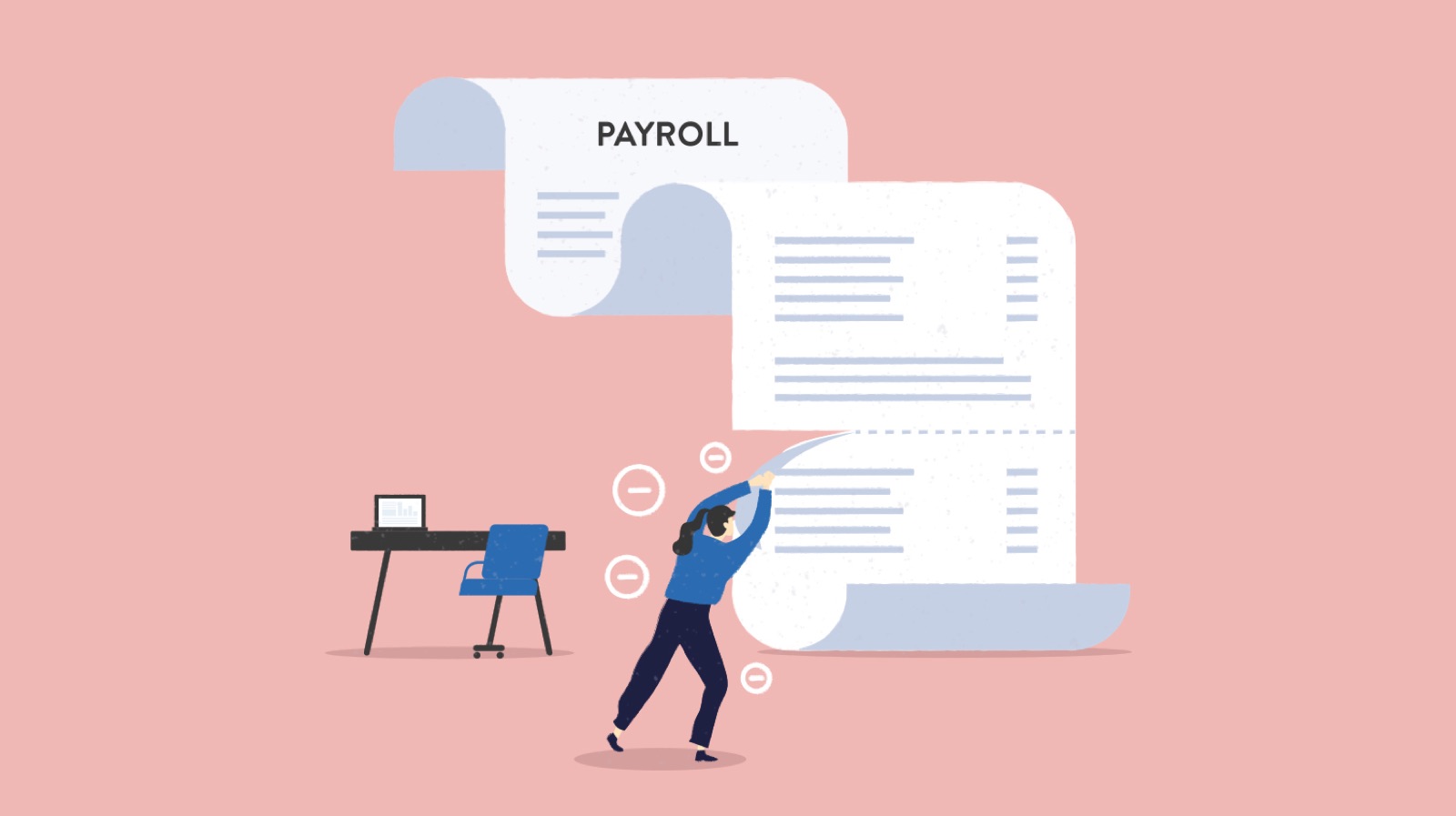
Choosing the right payroll solution for your business in the Philippines can be daunting. Should you engage a payroll service provider? Should you opt for a payroll system only? Or perhaps both? With the numerous options available, the process can be especially overwhelming for new business owners or foreign companies entering the Philippine market.
Understanding the intricacies of local payroll requirements is crucial. Without this, it’s difficult to determine which payroll system in the Philippines will suit your business needs. As you’ll discover, payroll in the Philippines involves more than simply issuing payslips and paying employees. The payroll compliance framework in the Philippines demands continuous adherence to bi-monthly, monthly, and annual regulations. In short, payroll never sleeps in the Philippines.
In this article, we’ll explain why an End-to-End Payroll Solution – combining both payroll processing services and a payroll system – is a vital asset for your business. It will not only ensure accurate payroll computation but also help you navigate the complexities of compliance and payment of wages.
In this section, we give you a definitive glossary for payroll terms. This will include a list of the key payroll-related terms and concepts that businesses must understand if they are engaging employees here in the Philippines.
We thought it might be helpful to list down just some of the key activities and questions that businesses need to be aware of from the perspective of payroll, particularly when exploring the options around payroll outsourcing service providers in the Philippines and payroll system providers:
PH employers will regularly ask the following questions when either starting or running a business in the Philippines:
The items mentioned above are just some of the key factors that arise during discussions when companies are exploring their payroll requirements and options.
For further insights about the specifics and nuances of performing and processing payroll in the Philippines, check out our article on Payroll for Startups, Small Businesses, and SMEs in the Philippines.

As mentioned above, there are a significant number of considerations when it comes to ensuring that payroll is managed effectively in the Philippines.
From the generation of accurate payroll data, and payment of wages computation, to filing payroll-related taxes and government contributions, and to issuing payslips, payroll in the Philippines is an ongoing process that involves various tasks and activities.
Some of these activities can be automated (i.e. using a system), while some must be performed manually (i.e. by humans).
An End-to-End Payroll Solution is an option for companies that provide both a payroll processing service (the human element) and a payroll system (the automated computer software element).
For ease, we’ve included a brief explanation of these two concepts below. We also confirm how the integration of both payroll service and payroll system can provide the ultimate payroll experience.
A payroll service, which is also known as a payroll processing service, is usually performed by a team of payroll experts. These expert providers are equipped with the experience and knowledge to ensure that payroll is computed accurately and in accordance with the local Philippine compliance framework.
In contrast to a payroll system (see below) or any type of computer software system, the payroll service will always have real payroll specialists (i.e. humans) performing the service on behalf of the client company.
This can be beneficial to the client because it means that there’s an actual person or Team to speak to in case any questions or issues arise during a particular payroll period.

A payroll system is a computer software system, nowadays, usually cloud-based, which companies can subscribe to from a third-party payroll system provider (or develop one in-house). A payroll system can enable a company to manage its payroll data and automate many parts of the overall payroll process. For example, this could include automation of computations for net salaries, taxes, mandatory government/social contributions, and more.
Depending on the specific functionalities of the payroll system, it may be possible to also manage the 201 File within the payroll system (HRIS system) as well as capture employee leave and attendance data during each payroll cycle (Timekeeping system).
If a company engages a payroll service only, they will have access to a team of payroll specialists who will ensure that payroll is computed and paid out to company employees during each payroll cycle. However, to enable the payroll specialists to process payroll, they will first need to receive the raw payroll/HR data from the company.
If a company subscribes to a payroll system only, it will only be able to generate the raw HR/payroll data through the system in an efficient and centralized manner. However, once the raw HR/payroll data is generated, there is still a need for someone to complete the payroll cycle, file the taxes, and ensure that employees receive their salaries.
An End-to-End Payroll Solution combines each task and activity outlined above under one centralized team and system. A payroll processing service that is fully integrated with and supported by a payroll system – the ultimate payroll experience.
Now that you know what comprises an end-to-end payroll solution, we move on to identify why a comprehensive solution can make your Philippine business more valuable.
Below, we have highlighted just five reasons why the end-to-end solution can benefit your PH business and ensure that your payroll function has a solution that ensures payroll is processed accurately, on time, and compliantly – from start to finish – for every payroll cycle.

As mentioned above, there are various elements of the payroll cycle that can be automated. Under the local Philippine compliance framework, however, there remain a number of key payroll-related tasks that must be performed manually (by humans).
For example, where a payroll system is being leveraged by a company, it can help to monitor and capture employee attendance, leaves, allowances, bonuses, salaries, and other types of employee data necessary for processing payroll. This information can then be automated to compute net salaries, withholding tax on compensation, government mandatory contributions, and even preparation and issuing of payslips.
However, there are still several human-performed tasks that are required to transition that data from the payroll system and ensure that employees are paid, submissions are made to government agencies and payroll is correctly transitioned to the accounting and finance department for updating the accounting books and allocating costs.
Here are some of the tasks that must be performed by humans:
A provider that offers an End-to-End Payroll Solution will ensure that all the tasks mentioned above happen and that the employer has just one point of contact along the way. It will ensure that the entire payroll process – from data generation through the payroll system to pay-out of salaries by employers – can be performed via a one-stop-shop payroll provider.
Technology, particularly, cloud-based systems, are fantastic tools that can add real value across every function of a business. More than ever, technology is helping companies and management teams to run more effective processes, ensure better data management, monitor performance and service delivery, and run more efficient business operations.
However, such business systems and cloud solutions are simply tools, that must first be understood and leveraged fully to achieve the best results.
Consider a carpenter using one of her key carpentry tools – the circular saw. With skilled and knowledgeable hands, a circular saw can help a skilled carpenter create a masterpiece. If, however, the circular saw is being used by someone without the necessary know-how or expertise, they will struggle to create what they need to.
The need to understand the software or tool you are using is particularly important when it comes to payroll systems. Even more so, when operating the payroll system under the complex Philippines compliance framework.
Of course, payroll systems will typically have a customer support team to assist customers. However, such customer support is usually just to ensure that the system is working properly, and to respond to queries on different functionalities and modules within the system.
The customer support team would not usually get involved in assisting a company on how to compute payroll, manage leaves and attendance, payroll policies, review data entry methods, advise on processes and controls, understand changes in the payroll laws, or support government filings.
When a company engages a provider that offers an end-to-end payroll solution, they will have access to a payroll system as well as a team of payroll experts that will support the use of the system – those payroll experts can also monitor to ensure the payroll system is being used to its full potential. This ensures that employees are entering their data correctly and it guarantees that the employer has the most efficient and streamlined processes and controls in place.
In summary, with an end-to-end payroll solution, a company gets access to a system together with ongoing expert support from industry professionals on how that system should be operated to ensure a world-class payroll function!
No matter the business function, it will always be beneficial to have all related data and information across one platform and provider. This makes it easier for management and team leads to locate and process the necessary information with ease.
A fully equipped payroll system will be able to generate the HR and payroll data needed to process payroll. However, that data still needs to be transitioned to the payroll provider, or indeed, the team tasked with completing the payroll processing for each payroll cycle.
However, if you have engaged a payroll provider that offers both a payroll service and a payroll system – the entire process becomes a lot more streamlined!
Once the processes and controls are set up within the payroll function and both the company and payroll provider are aware of their tasks and responsibilities, each payroll cycle can run like clockwork. At each payroll cut-off before each payroll pay-out, the payroll provider can simply access the payroll system, review the payroll data for the relevant period, finalize the payroll register, and seek the company’s final approval on the payroll register.
Once the payroll register is approved, the payroll provider can proceed to upload the payment file to the employer’s bank account for disbursement and then proceed to make the necessary tax filings and government contributions filings with the various PH government agencies. Talk about efficiency!
The key benefit here is that when the payroll service provider requires the necessary information to move forward with the processing of payroll during each payroll cycle, they can find and process the information all in one place and move forward with ease due to the significantly more efficient interface between the provider and the company.
“Garbage In, Garbage Out,” is a phrase you will hear quite often – particularly when dealing with technology and cloud-based systems. This phrase is particularly relevant when it comes to managing and processing payroll data.
If a business in the Philippines subscribes to a Payroll System, that is undoubtedly a first step towards digitalization and automation – general all-around efficiencies can be created. However, the payroll system will only be as good as the data being entered into that system in the first place (the “input data”). The payroll system will therefore only be a value-add for the business if the responsible person or team involved can ensure that the right data is being entered at the right time.
A provider that offers the End-to-End Payroll Solution will continuously review the client company’s processes, controls, and the quality of the data that is being processed through the system. In effect, the company will benefit from a more in-depth controllership-type service that will identify any obstructions, pain points, data errors, or inaccuracies within the core data.
Why is this important? It gives a company’s management team confidence that whatever happens during a particular month or payroll cycle, there is a third-party team reviewing all the data and ensuring that the payroll system is being used properly and that the company data is secure and accurate.
Remember – many companies provide employees and staff to other companies as their core service (e.g. BPO, back-office, shared services, etc.). As such, there is no room for error when it comes to payroll/employee data – revenue value will regularly be based on and need to be validated by payroll costs.
Anyone running a business in the Philippines, or indeed in any country, will be aware that laws, regulations, and legislation can change – sometimes with warning and sometimes without any warning at all.
Many of these changes may not be fundamental to the core of your business. However, for any company that engages employees here in the Philippines, any changes to payroll laws or regulations will have an impact on the business and will need to be considered and acted upon.
The Philippines, like any other country, has many legislative changes throughout any given year. From a payroll perspective, this could relate to any of the following:
Unfortunately, a Payroll System will not inform your business when DOLE releases a new memorandum, or if the BIR releases a new regulation that might affect your payroll or labor function.
If, however, you have a team of payroll experts providing a payroll service, that Team can identify any changes that may be required to the payroll system and ensure that moving forward, the payroll system is fully aligned with the local PH payroll compliance framework.
Again, the added value that a comprehensive payroll solution, that a payroll service and a payroll system, can provide, should not be underestimated!
CloudCFO Payroll System offers a complete payroll solution tailored to meet the needs of businesses in the Philippines. With our payroll outsourcing services in the Philippines, your company can ensure accurate payroll processing from start to finish.
Our Payroll Solution comprises of 3 core elements:
By integrating these services, CloudCFO Payroll System ensures that your business can manage payroll smoothly and compliantly, providing the ultimate benefits of outsourcing payroll services.
Contact us today for a free demo and discover how our End-to-End Payroll Solution can make payroll one less thing to worry about.
Let CloudCFO run your payroll end to end: SSS, PhilHealth, Pag-IBIG and withholding tax computed, filed and paid on time.
Explore this service →or book a free consultation

Questions about how this affects your business? Our team replies within one business day.




























































