

Philippines services
The tax reform is aimed at generating additional revenue to fund the administration’s infrastructure program while reducing the tax burden of the large majority of the income taxpayers.
On December 19, 2017, President Rodrigo Duterte signed into law the Tax Reform for Acceleration and Inclusion bill, also known as TRAIN. The tax reform is aimed at generating additional revenue to fund the administration’s infrastructure program while reducing the tax burden of the large majority of the income taxpayers. But how will this impact employees, businesses and entrepreneurs?
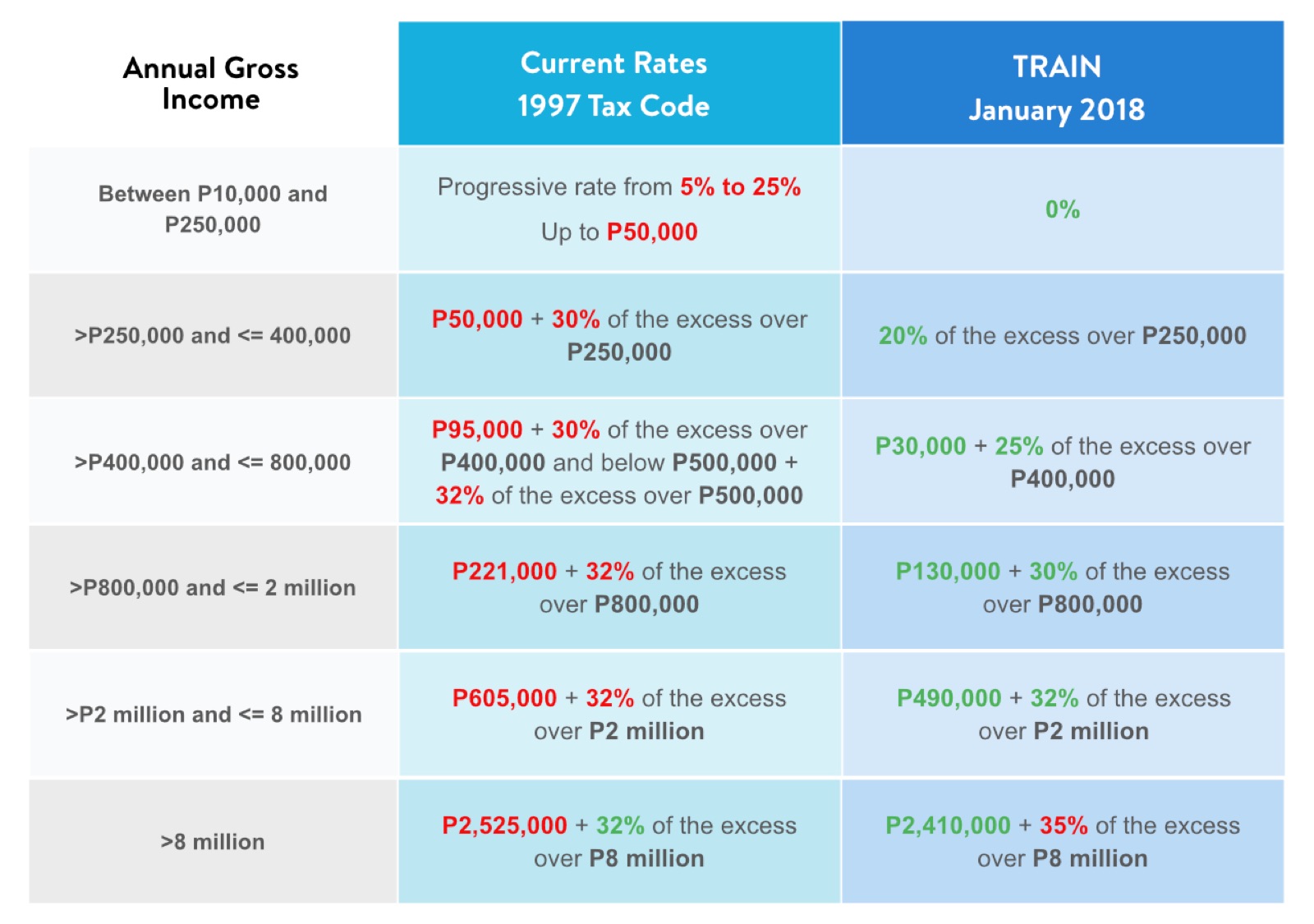
TRAIN lowers the personal income tax for almost everyone. Those with an annual taxable income below P250,000 will now be exempt from paying taxes while the rest of taxpayers will see a decrease in their tax rates. Only those earning an annual taxable income of more P5 million would see an increase in tax rate from 32% to 35%. The table below shows the differences introduced by TRAIN against the 1997 Tax Code used until January 1st, 2018.
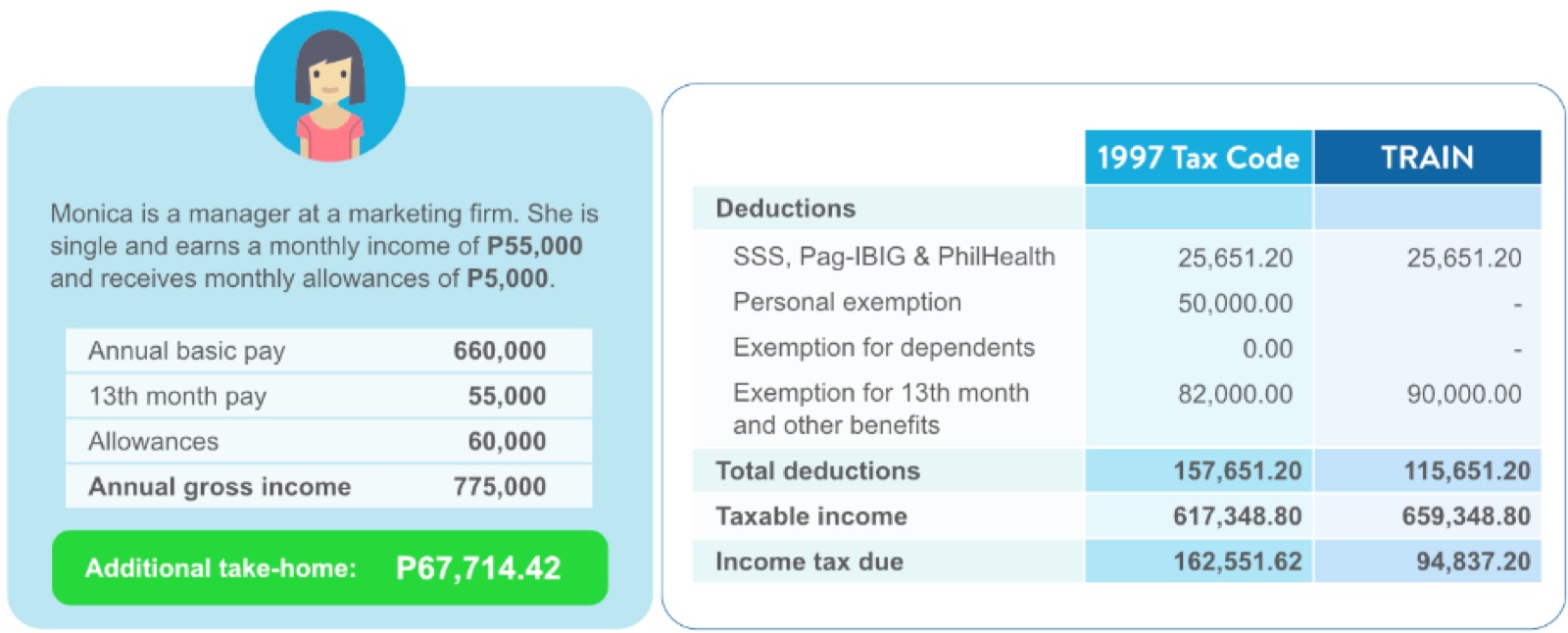
TRAIN also increases the annual tax exemption for 13th month and other bonuses from P82,000 to P90,000.
We have simulated 2 scenarios to illustrate the difference in annual take home pay before and after the reform.
Starting January, self-employed professionals with an annual gross income not exceeding the new Value Added Tax threshold of PHP 3 million per year will have the option to choose between the new individual tax rates or a flat 8% tax rate on gross receipts in excess of PHP 250,000. Self-employed professionals who opt for the flat 8% tax rate would also not be subject to the 3% percentage tax.
Filing is also simplified. Previously self-employed professionals had to file for percentage tax monthly and income tax quarterly. They only need to file once a year starting 2018.
TRAIN introduces an increase in the VAT threshold from PHP 1.9 million to PHP 3 million. This means that businesses with annual gross sales below PHP 3 million will be exempt from VAT.
Although the reform repeals 54 VAT exemptions, the following sectors and individuals remain exempt from paying VAT:
While the tax reform is already effective, a number of practical questions about how they are to be implemented remain. A few examples:
The BIR is working on those new rules and regulations and has opened public consultations in January. We are monitoring any releases from them. We will inform you of any updates and how this would impact you and your business.
In the meantime, visit us at cloudcfo.ph or contact us at hello@cloudcfo.ph for more information on how we can support your business here in the Philippines.
Stay BIR-compliant without the stress. Our tax team handles your filings, payments and tax planning every month.
Explore this service →or book a free consultation

Questions about how this affects your business? Our team replies within one business day.




























































