Philippines services
Registering with the Bureau of Internal Revenue (BIR) is the step that turns your business into a recognized taxpayer and gives you the legal authority to issue invoices. It's also where your ongoing tax life begins, so getting it right sets you up for clean compliance from day one.
This guide covers when you must register, how to do it (now largely online), what the BIR issues you, and the invoicing rules that changed under the Ease of Paying Taxes Act.
This is part of our complete guide to business registration in the Philippines. You'll generally need your DTI/SEC certificate and local permits in hand first.
Under Section 236 of the Tax Code, anyone subject to internal revenue tax must register with the BIR. Until you do, you can't legally issue invoices, file returns, or, in practical terms, operate as a compliant business. Banks and clients will ask for your Certificate of Registration, and the BIR can suspend or close an unregistered business that sells without issuing invoices.
In short: this is the linchpin that legitimizes your business with the tax authority and defines your filing obligations.
You must register before you commence business or issue your first invoice. In practice, many businesses register within 30 days of receiving their Mayor's Permit, and that clock can catch people off guard, because it runs whether or not you've earned a single peso yet.
You register with the Revenue District Office (RDO) that has jurisdiction over your business address (or your residence, for home-based sole proprietors). Because the deadline can start ticking at the LGU stage, it's worth planning your BIR registration before you finish your local permits.
The BIR has moved most of this online, though in-person registration remains available.
Processing is generally quick, around one to three working days once your documents are complete. With online registration you'll typically receive an email about your Certificate of Registration's availability.
The form depends on your taxpayer type.
| Form | Who files it |
|---|---|
| BIR Form 1901 | Sole proprietors, self-employed individuals, professionals, mixed-income earners |
| BIR Form 1903 | Corporations, partnerships, cooperatives, and associations |
| BIR Form 1902 | Employees applying for a TIN |
| BIR Form 1904 | One-time taxpayers, or those registering under EO 98 for a TIN only |
A key detail when you fill out your form: your industry / PSIC classification and your VAT or Non-VAT election determine your tax types, so get these right the first time.
One of the most important decisions during BIR registration is whether your business will be VAT-registered or Non-VAT. Some businesses are required to register for VAT, while others qualify to remain Non-VAT depending on their activities and sales. This choice affects invoicing, tax filings, and pricing, so it's worth understanding before completing your registration.
Once approved, you'll receive several documents. Keep them safe and display the required ones.
Every registered business must keep books of accounts, and they must be registered with the BIR before use. You have three options:
ORUS now supports electronic book registration, and Form 1905 is used to register books along with other registration updates. Note that books and records must generally be retained for five years.
These documents form the foundation of your tax compliance. You'll refer back to them whenever you file returns, update your registration, or undergo a BIR audit.
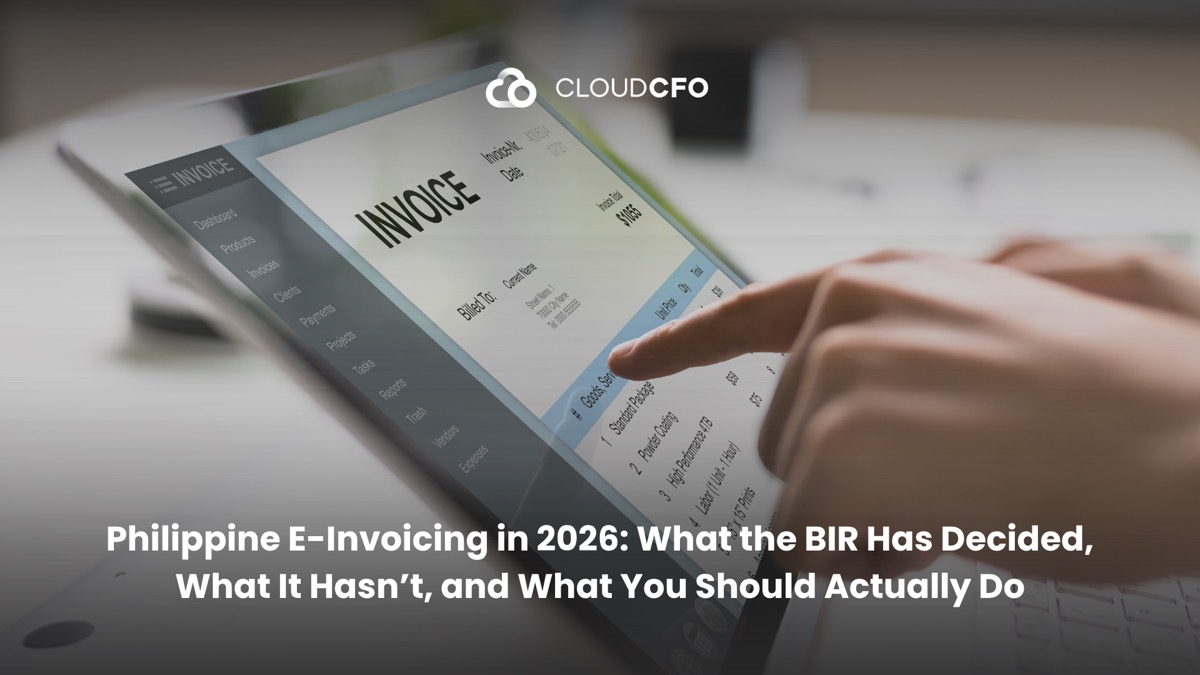
This is where the rules changed, and it trips up businesses relying on older guides. Under the Ease of Paying Taxes Act and RR 7-2024:
If you have leftover pre-printed Official Receipts, check the current transitory rules before using them; they may only serve as supplementary documents.
The ₱500 Annual Registration Fee was abolished effective January 2024 under the Ease of Paying Taxes Act. You no longer file BIR Form 0605 for it every January. The only fee at registration is the ₱30 Documentary Stamp Tax. If anyone tries to charge you the old annual fee, it's no longer due.
Your Certificate of Registration lists exactly which taxes you're on the hook for, and that's determined at registration. Most growing businesses will deal with some mix of income tax, VAT or percentage tax, and withholding taxes. Under the EOPT Act, you're also assigned a taxpayer classification (micro, small, medium, or large, based on gross sales), which affects how you file.
This is the natural handoff into ongoing tax compliance. For the full picture of what each tax means and how to file, see our complete Philippine Taxes Guide, including the Income Tax and VAT sub-guides.
Do I still need to pay the ₱500 annual registration fee?
No. It was abolished under the Ease of Paying Taxes Act effective January 2024, and Form 0605 is no longer filed for it. The only fee at registration is the ₱30 Documentary Stamp Tax.
Can I register with the BIR online?
Yes. ORUS (orus.bir.gov.ph) is the main online portal, with the email-based NewBizReg as an alternative. In-person registration at your RDO is also still available.
Which BIR form do I use?
Form 1901 for sole proprietors, self-employed individuals, and professionals; Form 1903 for corporations and partnerships.
When do I need to register?
Before you commence business or issue your first invoice, commonly within 30 days of receiving your Mayor's Permit. You register with the RDO that covers your business address.
Do I still issue "Official Receipts"?
No. Under the EOPT Act, Official Receipts and Sales Invoices have been unified into a single "Invoice" for both goods and services.
Next step
With your BIR registration complete, the final setup step applies once you start hiring.
Go to the Employer Registrations GuideBook a free consultation